Selected work · Capability overview
Operational Readiness
Diagnose the constraint before prescribing training.
Readiness split into site, infrastructure, and business risk. Each one goes to the function that controls it.
Proof story 03 · Sandbox VR
Opening readiness: diagnose the constraint before prescribing
This case shows the judgment required to separate a training problem from a business-system problem and say so to leadership.
- Problem
- Openings were going badly and the standing recommendation was more training, more trainers, more post-opening support.
- Intervention
- Nine director-level interviews, then a readiness model that separates site, infrastructure, and business risk and assigns each to the function that controls it.
- Result
- Risk became visible and owned before launch. Training was applied only to the risks the data showed it could address.
- Interviewed nine director-level stakeholders across the opening functions
- Tested their explanations against historical opening data
- Built the Opening Readiness Risk Panel in SQL and Power BI
- Facilitated functional owners through defining indicators, thresholds, and ownership
Results
What actually moved
9
Director-level stakeholders interviewed across functions
3
Risk domains separated: site, infrastructure, business
6 of 7
Indicators available before launch
Business diagnosis
Readiness across the whole opening system
Leadership asked for more training. I interviewed nine director-level stakeholders across functions, compared the available data, and separated readiness into site, infrastructure, and business risks. I then facilitated functional owners through the indicators, thresholds, and ownership for the risks they controlled. Training addressed the gaps tied to manager or employee capability.
01
Readiness diagnosis
Establish what is actually constraining an opening, by domain, before choosing an intervention.
02
Role and capacity requirement
Determine how many qualified coaches an opening schedule requires.
03
Coach qualification
Define what a coach must be able to do, not what they must have attended.
04
Certification
Certify against demonstrated performance.
05
Deployment
Assign certified coaches to openings, with visibility of who is assigned to what.
06
Observation and audit
Managers verify coaching in the openings they already oversee.
07
Recertification or decertification
Certification is not permanent. A failed audit removes it, and the coach requalifies before deploying again.
08
Opening consistency
The same readiness standard is applied opening to opening, and the record shows it.
Verification sits with managers in the openings they already oversee. Certification can be removed after a failed audit, and the coach requalifies before deploying again.
New Store Opening Portal
The mechanism that made readiness observable
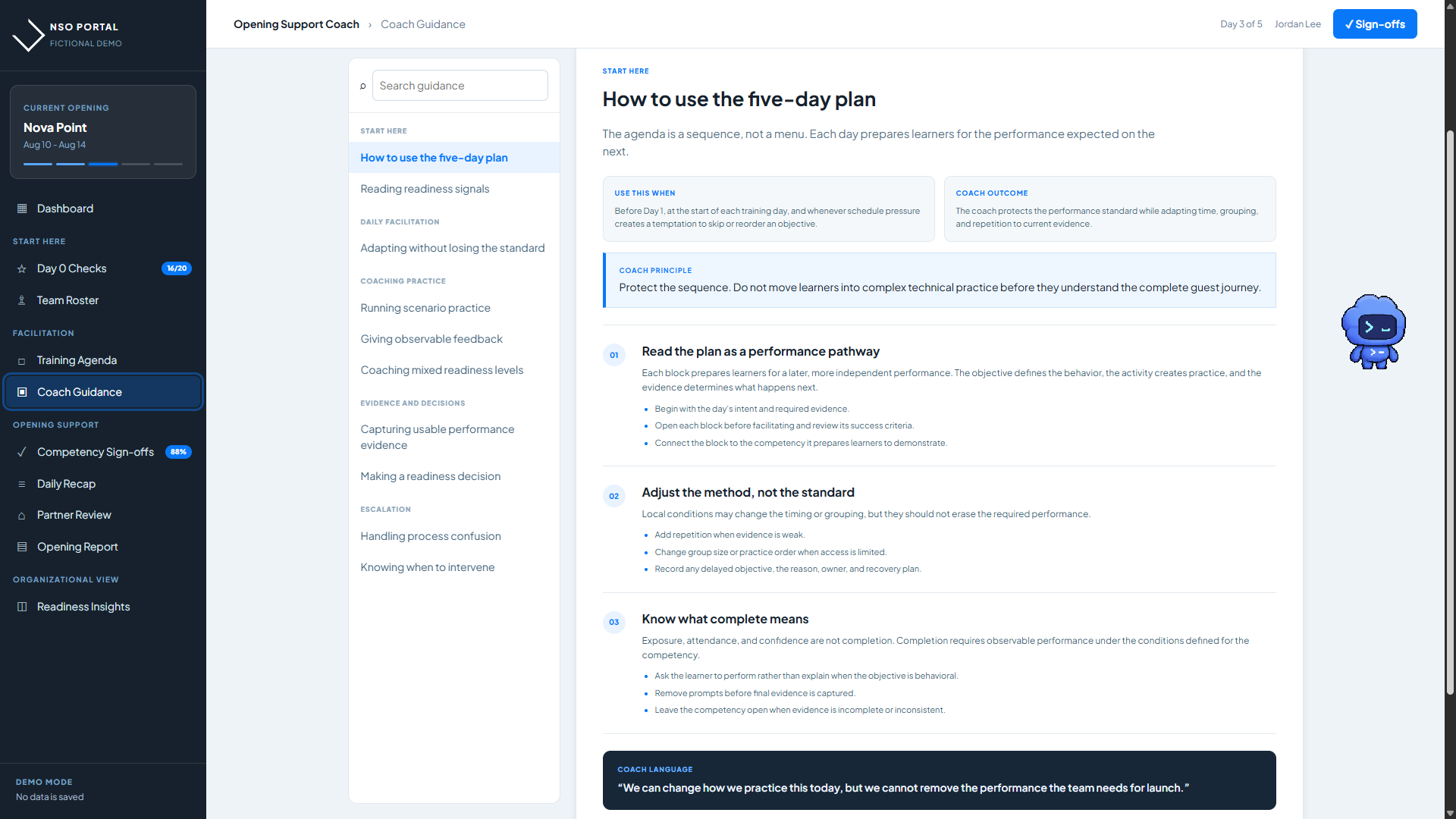
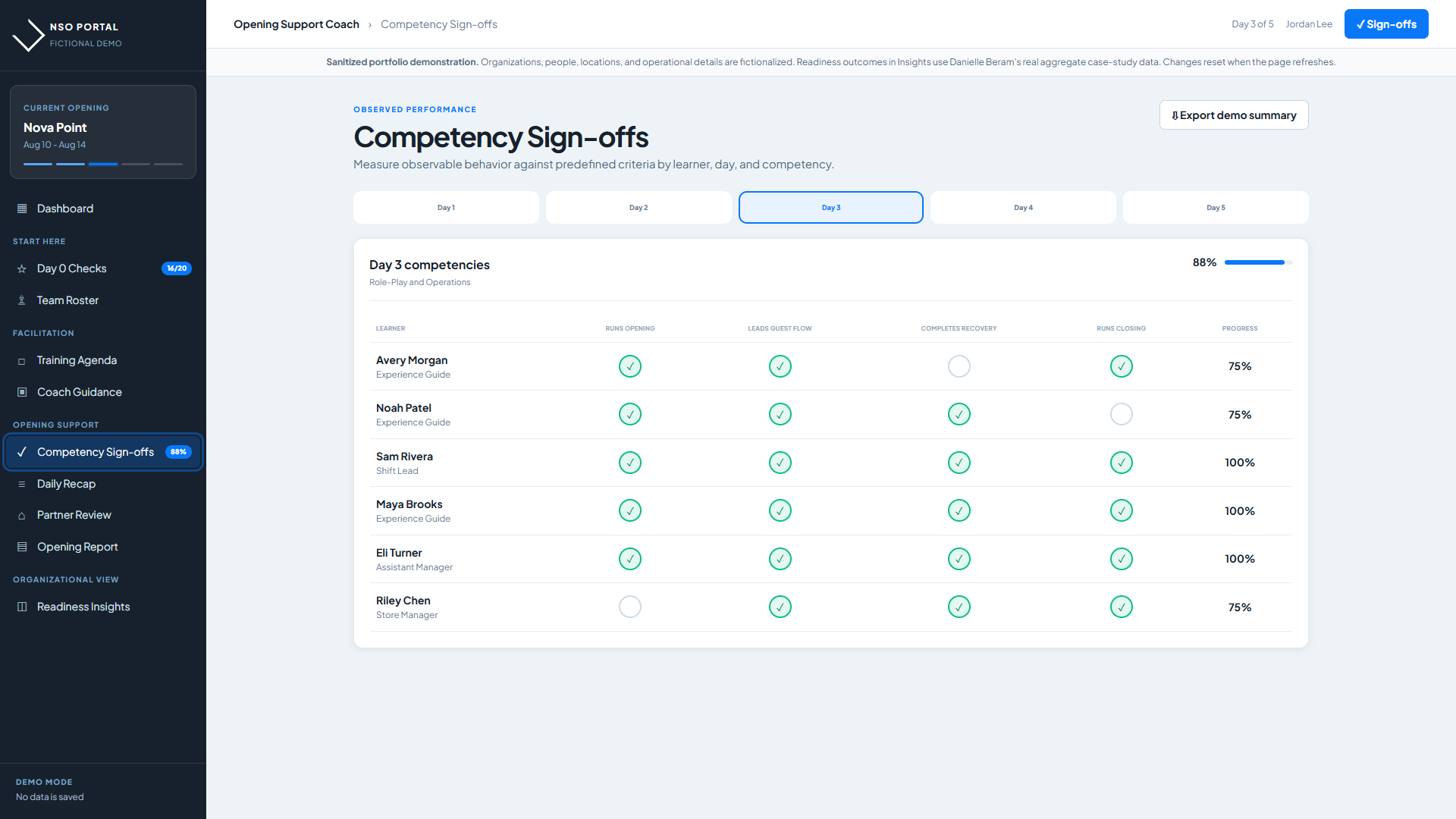
Coaches were running five-day openings on spreadsheets, paper and personal notes, with no shared workflow and no consistent readiness record. The portal gave them one place to record observed performance against a defined standard.
56 → 83.2
Average readiness score, historical baseline to first five platform-supported openings
+35%
Higher average technical readiness
+28%
Higher average operational and guest readiness
The comparison covers 24 historical openings and the first five openings supported by the portal. It shows an average difference during the initial rollout. It does not isolate the portal from the curriculum, coach guidance, or other changes introduced at the same time.
Third-party evidence
What people who worked with me observed
LinkedIn recommendations from people who saw this work up close.
Our cross functional meetings were always prepped, organized and productive. Not only is she a hard worker, she is an empathic and understanding leader.
Annie Duong
Cross-functional partner
Our team trains franchisees and their staff, offering on-site support during grand openings. Danielle was an outstanding program manager whose meticulous attention to detail and dedication to the L&D department drove its remarkable success.
Marcus Lacey
Direct report